Blood pressure and the eyes
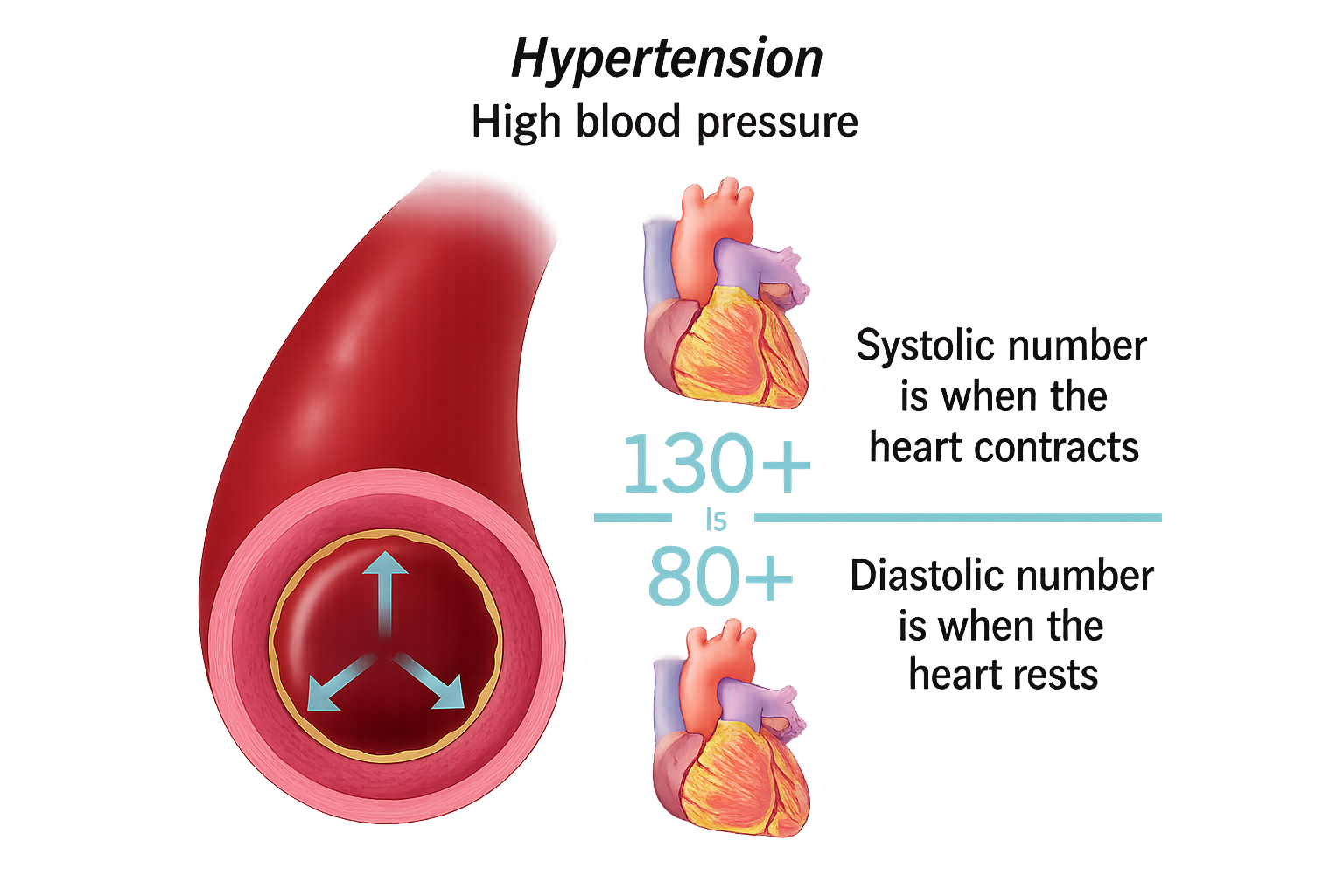
What’s normal blood pressure? Normal blood pressure is generally considered to be less than 120/80 mmHg, where the top number is the systolic pressure and the bottom number is the diastolic pressure. Systolic pressure is measured when the heart contracts whereas diastolic pressure is measured when the heart rests.
High blood pressure, or hypertension, refers to a blood pressure reading higher than 140/90. Increased blood pressure causes damage to arterial walls because blood flows through the arteries with too much force, causing mechanical stress on the inner lining (endothelium), making it less elastic.
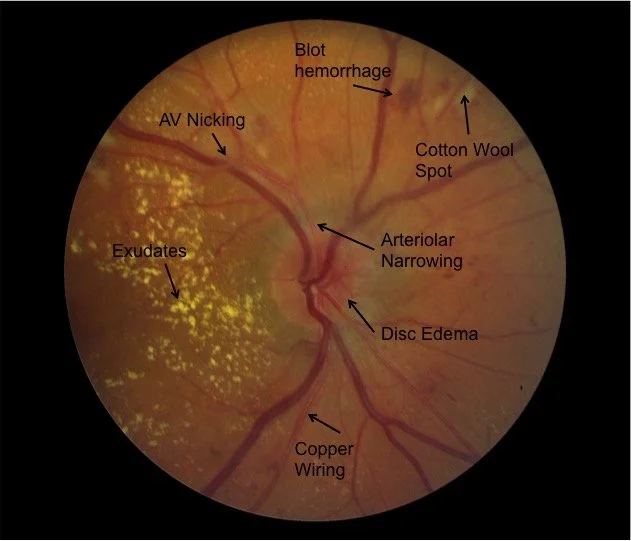
Hypertension, can have a significant impact on eye health, often without noticeable symptoms until damage is advanced. The delicate blood vessels that supply the retina—the light-sensitive tissue at the back of the eye—are particularly vulnerable to the effects of elevated pressure within the circulatory system. Over time, uncontrolled hypertension causes these vessels to harden, narrow, or leak, leading to a condition known as hypertensive retinopathy. These characteristic retinal changes can be detected by an optometrist during an eye examination. Chronically elevated pressure damages the small retinal arteries, leading to arteriolar narrowing, whilst the vessels develop a reflective silver-wire or copper-wire appearance. Increased vascular pressure may also cause retinal haemorrhages, often appearing as flame-shaped bleeds.
As the vessel walls become damaged, blood flow to the retina is reduced, depriving its cells of oxygen and nutrients. Cotton wool spots develop where blood flow is reduced, creating areas of nerve fibre damage. These retinal signs provide crucial insight into the severity of hypertension and the risk of systemic complications. Hypertensive retinopathy can result in blurred vision, visual field defects, or, in severe cases, sudden loss of sight due to a retinal vein and artery occlusions..
Additionally, hypertension can contribute to optic nerve damage by reducing blood supply to the optic nerve head, potentially resulting in optic neuropathy. Patients with both high blood pressure and diabetes are at even greater risk, as the combined effects accelerate vascular damage.
Regular eye examinations are essential for detecting early signs of hypertensive changes. Managing blood pressure through lifestyle changes and medical treatment is crucial for protecting long-term vision and overall eye health