Blood sugar & the Eyes
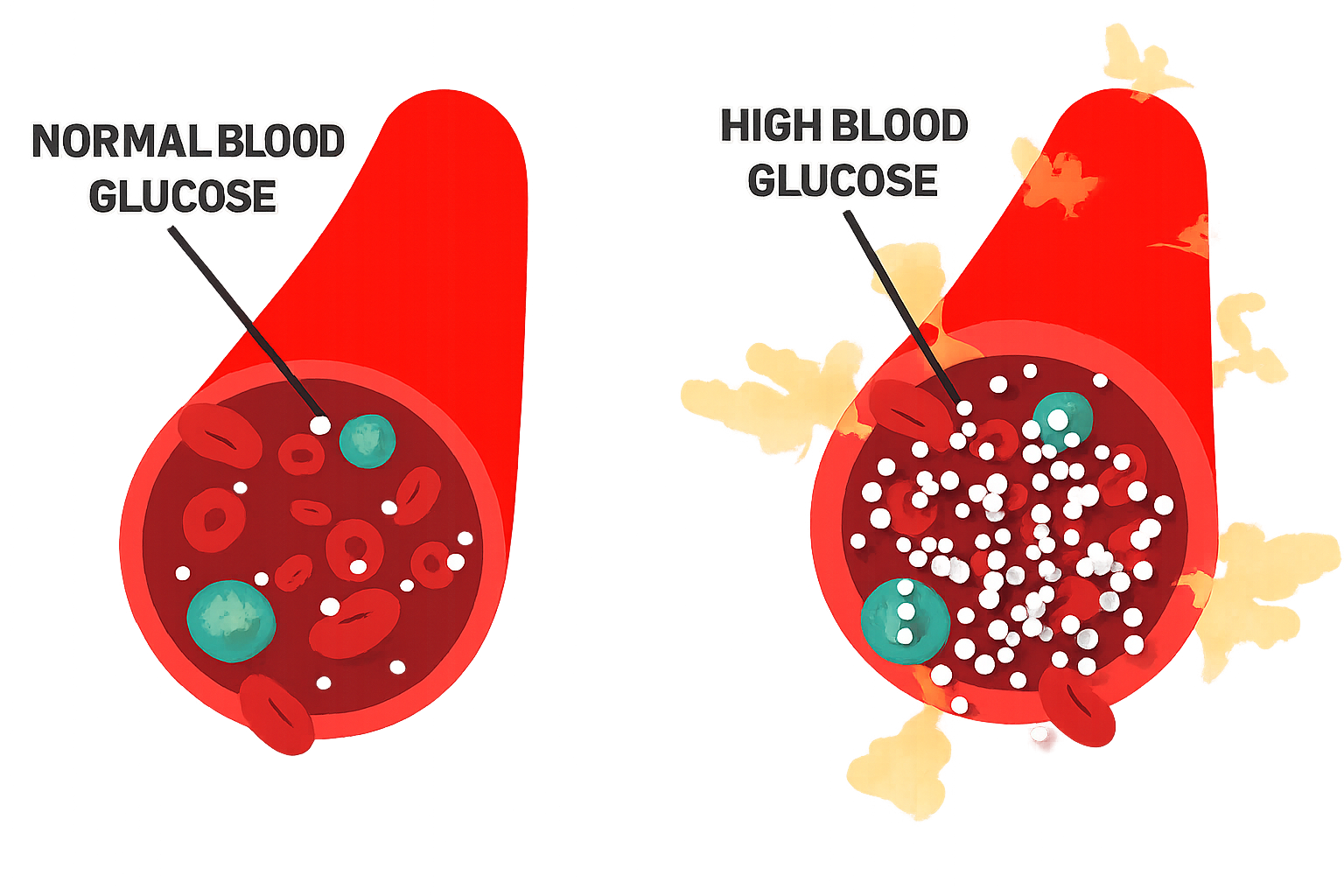
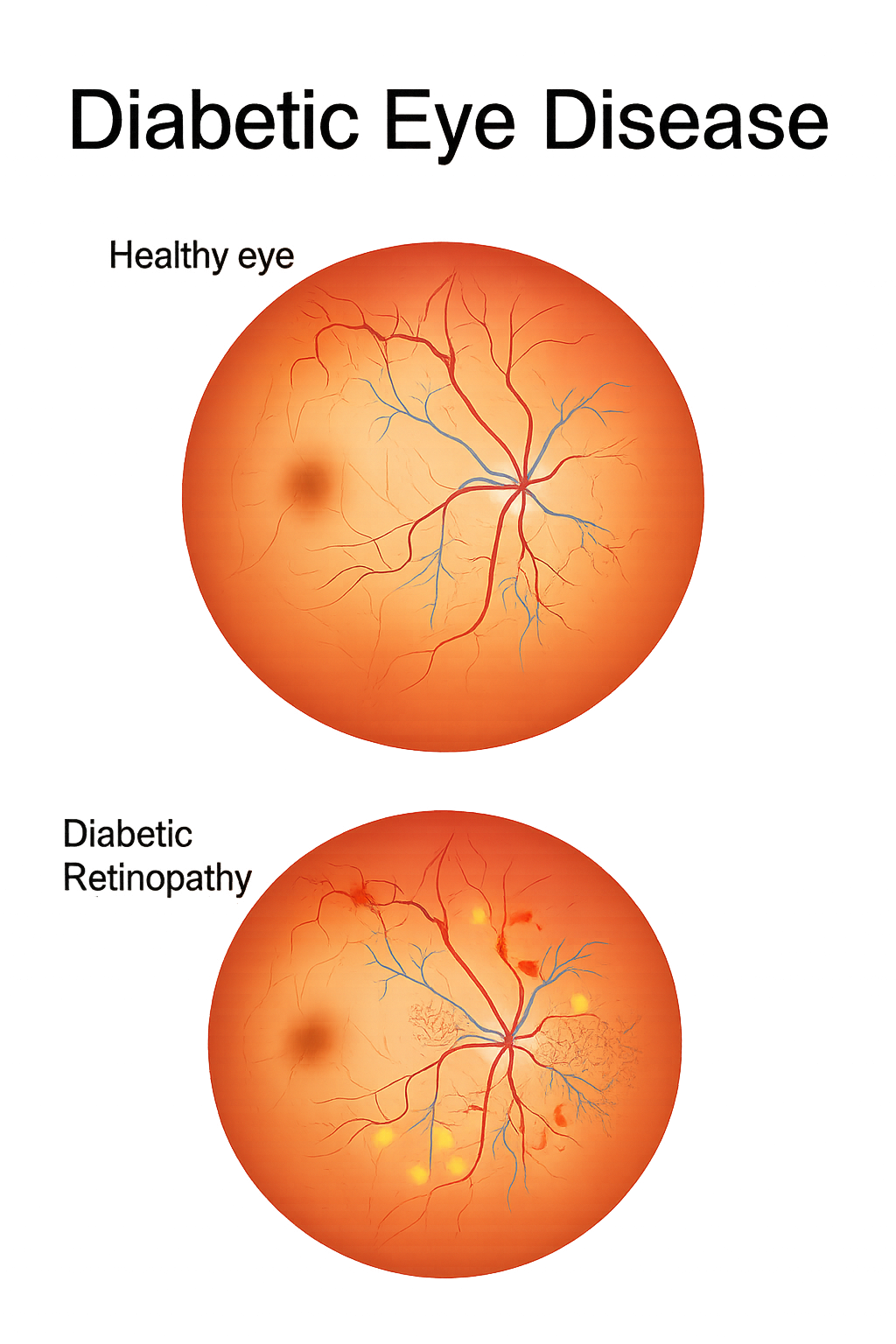
Diabetic retinopathy is one of the most common and serious complications of diabetes, affecting the delicate blood vessels at the back of the eye. The single most important factor influencing the development and progression of diabetic retinopathy is blood sugar control. When blood glucose levels remain consistently high, they damage the small vessels that supply oxygen and nutrients to the retina. Over time, this leads to leakage, swelling, bleeding, and abnormal blood vessel growth—changes that can severely impact vision.
A key marker used to assess blood sugar control is the HbA1c test. HbA1c (also known as the A1c, glycated hemoglobin, or glycosylated hemoglobin test) reflects the average blood glucose level over the previous two to three months and is expressed as a percentage. The higher the HbA1c, the greater the amount of glucose circulating in the bloodstream, and the greater the risk to the eyes. Numerous large clinical studies, including the Diabetes Control and Complications Trial (DCCT) and United Kingdom Prospective Diabetes Study (UKPDS), have demonstrated a strong, direct correlation between HbA1c levels and the likelihood of developing diabetic retinopathy.
For example, each 1% increase in HbA1c is associated with a significant rise in the risk of both developing retinopathy and experiencing progression. Conversely, lowering HbA1c—especially to a target below 7% for many patients—can reduce the risk of retinopathy by up to 50%. Maintaining stable, well-controlled blood glucose levels helps protect the retinal blood vessels from ongoing damage.
In addition to lowering HbA1c, consistent day-to-day blood sugar management is equally important. Frequent fluctuations, even with a “good” overall HbA1c, can contribute to microvascular stress. A combination of healthy eating, regular physical activity, medications or insulin therapy, and ongoing monitoring can help achieve stable glucose control.
Regular eye examinations are essential, as early diabetic retinopathy often has no symptoms. When detected early, treatments such as anti-VEGF injections and laser therapy can prevent or reduce vision loss.
By keeping HbA1c levels within the recommended range and maintaining stable blood sugar control, individuals with diabetes can significantly reduce their risk of vision-threatening diabetic retinopathy.
Diabetes Control and Complications Trial (DCCT): results of feasibility study. The DCCT Research Group. Diabetes Care. 1987 Jan-Feb;10(1):1-19. doi: 10.2337/diacare.10.1.1. PMID: 2882967.
King P, Peacock I, Donnelly R. The UK prospective diabetes study (UKPDS): clinical and therapeutic implications for type 2 diabetes. Br J Clin Pharmacol. 1999 Nov;48(5):643-8. doi: 10.1046/j.1365-2125.1999.00092.x. PMID: 10594464; PMCID: PMC2014359.