Glaucoma
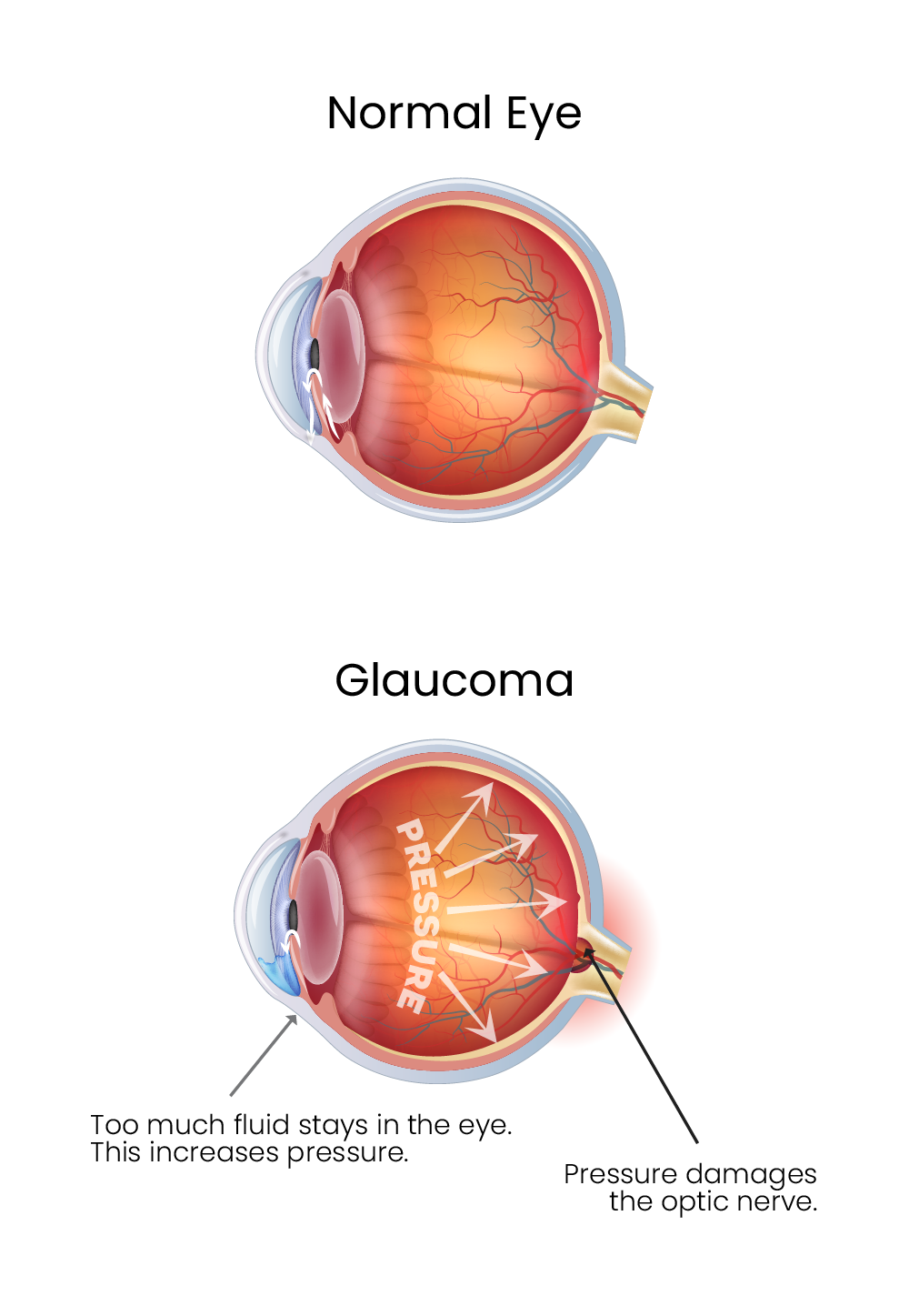
Glaucoma is a progressive eye disease characterized by damage to the optic nerve, often associated with elevated intraocular pressure (IOP). It is one of the leading causes of irreversible blindness worldwide. Because vision loss from glaucoma occurs gradually and typically without early symptoms, it is often called the “silent thief of sight.” The common underlying feature is progressive optic nerve damage, which leads to gradual peripheral vision loss, and eventually central vision loss if untreated.
The most common form, primary open-angle glaucoma, develops when the eye’s drainage system becomes less efficient over time, causing fluid (aqueous humour) to build up and increase pressure. Another type, angle-closure glaucoma, occurs when the drainage angle suddenly becomes blocked, leading to a rapid rise in pressure and requiring immediate emergency treatment.
Risk factors for glaucoma include advancing age—especially over 60—family history of the disease, and certain ethnic backgrounds, with people of African, Asian, or Hispanic descent facing higher risk. Individuals with high myopia, diabetes, hypertension, thin corneas, or long-term steroid use are also more susceptible. Eye injuries and certain vascular conditions can further increase risk.
While elevated eye pressure is the most significant risk factor, glaucoma can occur even with normal IOP, which is known as normal or low tension glaucoma. Normal tension glaucoma is easy to miss since the intra-ocular pressure is in the normal or even low range. A routine test known as ocular coherence tomography (OCT) is often able to detect damage to the optic nerve and retina before vision loss has occurred.
Treatment aims to reduce eye pressure and prevent further damage, as lost vision cannot be restored. First-line therapy typically includes medicated eye drops that either reduce fluid production or improve fluid drainage and a laser procedure known as selective laser trabeculoplasty (SLT). For more advanced or resistant cases, surgical options may be recommended —including trabeculectomy, tube shunts, or minimally invasive glaucoma surgeries (MIGS).
Regular comprehensive eye examinations are crucial, particularly for high-risk individuals. Early detection allows for timely treatment, significantly reducing the likelihood of vision loss. With appropriate management and monitoring, most people with glaucoma can preserve functional vision throughout their lives.