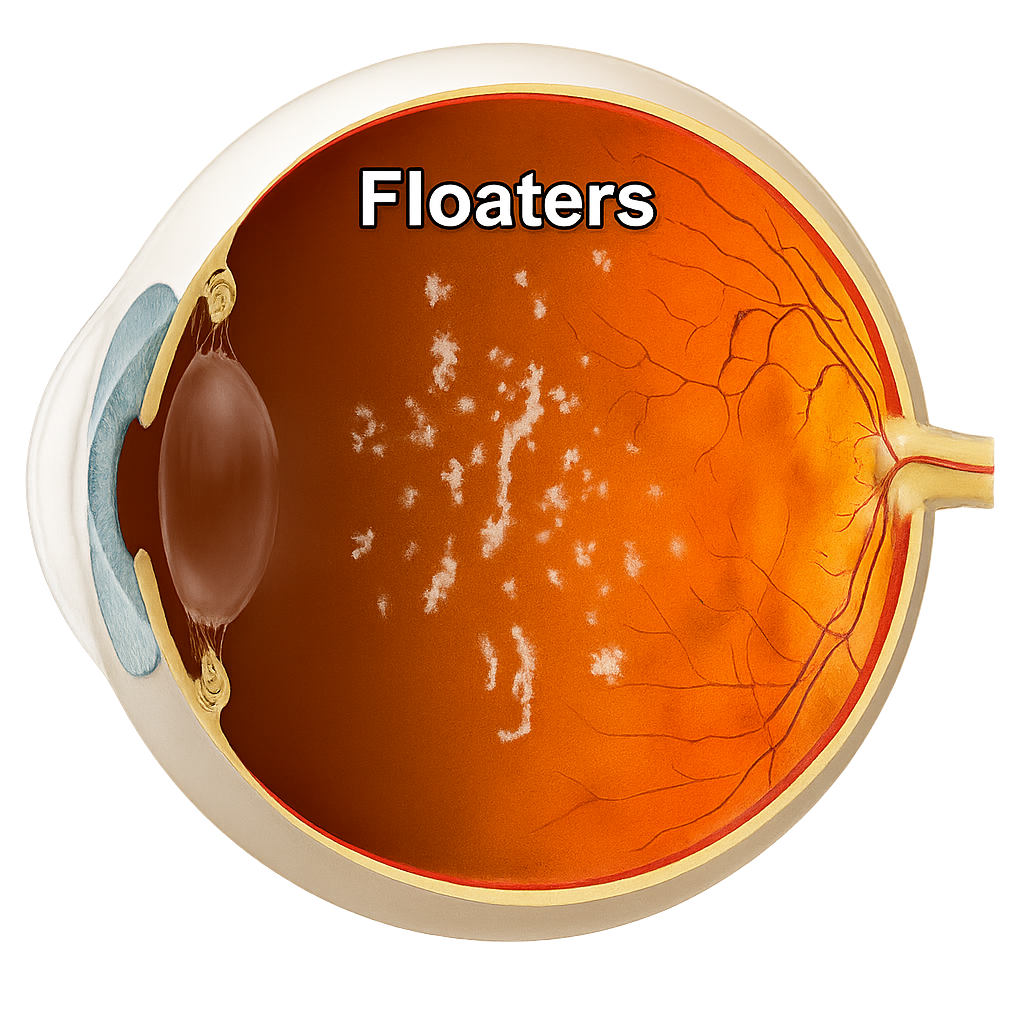
Floaters
Floaters are small spots, threads, cobweb-like shapes, or specks that drift through a person’s field of vision. They are most noticeable when looking at a bright, uniform background such as a blue sky or a white wall. Floaters are tiny clumps or strands of collagen fibres that form within the vitreous—the clear, gel-like substance that fills the back of the eye. Although often harmless, floaters can sometimes signal serious underlying eye disease, making careful evaluation essential.
One of the most common causes is posterior vitreous detachment (PVD). As we age, the vitreous naturally shrinks and becomes more liquid. Eventually, it can pull away from the retina, creating floaters and sometimes brief flashes of light. PVD itself is usually benign, but in a small percentage of cases, the traction caused by the vitreous separating from the retina can create a retinal tear.
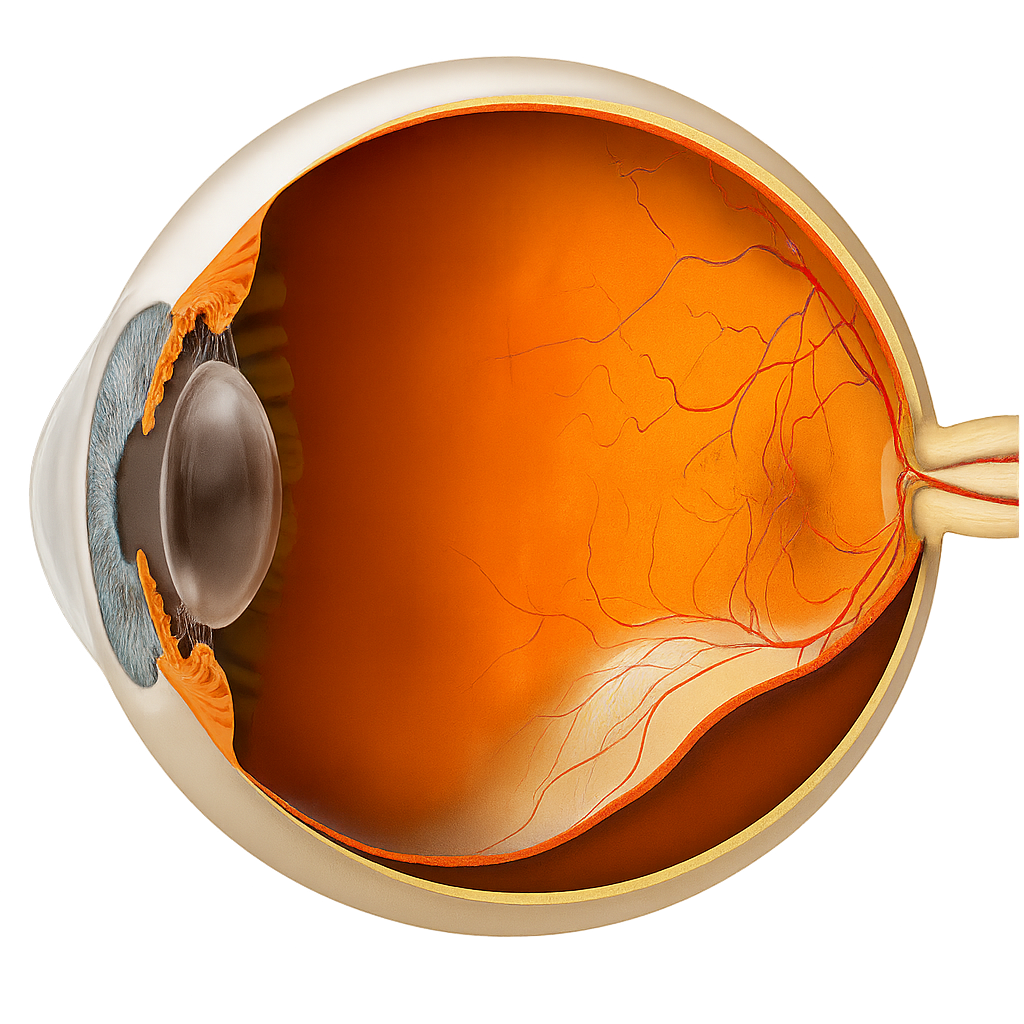
A retinal tear is a serious and potentially sight threatening condition because fluid can seep underneath the retina, leading to a retinal detachment. Symptoms suggesting a tear or detachment include the sudden appearance of one or more floaters, flashes of light, or a shadow/curtain moving across one’s vision.
Any new floaters or the sudden awareness of flashing lights requires immediate examination by an optometrist or ophthalmologist, ideally on the same day to discount a retinal tear or detachment. Prompt examination is critical because early detection dramatically improves outcomes. A thorough examination includes a dilated fundus examination (DFE) where drops are used to dilate the pupils. Enlarging the pupils allows the optometrist or ophthalmologist to have a more extensive view of the retina. Ultrawide digital retinal imaging is also recommended, which can help detect retinal holes, tears or detachments.
Most floaters related to uncomplicated PVD do not require treatment and generally become less noticeable over time as the brain adapts. However, if a retinal tear is discovered, laser therapy or cryotherapy can seal the tear and prevent detachment. If retinal detachment has already occurred, urgent surgery—such as pneumatic retinopexy, scleral buckle, or vitrectomy—is necessary to preserve vision.
For persistent, severe floaters that significantly impact daily life, vitrectomy or laser vitreolysis may be considered, though these carry risks and are reserved for select cases.
Overall, any sudden change in floaters or flashes should be treated seriously. Timely examination ensures that benign conditions are monitored and serious problems are detected before permanent vision loss occurs.