Diabetes
Diabetic retinopathy is one of the leading causes of vision impairment and blindness among working-age adults. It occurs when chronically elevated blood glucose levels damage the tiny blood vessels within the retina—the light-sensitive tissue at the back of the eye responsible for forming clear images. Over time, these weakened vessels can leak fluid or blood, become blocked, or trigger the growth of abnormal new vessels, all of which threaten sight.
There are two major stages of diabetic retinopathy. Non-proliferative diabetic retinopathy (NPDR) is the earlier stage, characterised by microaneurysms, small haemorrhages and fluid leakage that can cause retinal swelling, including diabetic macular oedema (DMO). As the disease advances, it may progress to proliferative diabetic retinopathy (PDR), where the retina becomes deprived of oxygen, stimulating the growth of fragile, abnormal new vessels. These vessels can bleed into the vitreous, cause scar tissue, and eventually lead to retinal detachment—one of the most severe causes of permanent vision loss.
A critical factor in preventing diabetic retinopathy or slowing its progression is maintaining good glycaemic control. Keeping HbA1c (otherwise known as haemoglobin A1c) levels in the target range— ideally below 7% for many patients—significantly reduces the risk of developing retinopathy and lowers the chance of existing disease worsening. Poorly controlled diabetes accelerates retinal damage, making early intervention and monitoring even more essential.
Left untreated, diabetic retinopathy can lead to serious vision complications, including blurred vision, dark spots, reduced contrast sensitivity, and eventual blindness. In fact, once PDR develops, the risk of severe vision loss rises dramatically. However, timely detection and treatment can preserve sight in the majority of cases.
Regular eye examinations play a crucial role in prevention. People with diabetes should have a comprehensive dilated eye exam at least once per year, or more frequently if retinopathy has already been detected. Today’s treatments—such as anti-VEGF injections, laser therapy, and vitrectomy surgery—are highly effective at stabilising or improving vision when initiated early.
Managing blood pressure, cholesterol, and kidney health further reduces retinal risk. A healthy lifestyle, including exercise and a balanced diet, also supports long-term eye health.
Diabetic retinopathy is a serious complication, but with vigilant metabolic control, regular eye care, and early treatment, the risk of vision loss can be significantly reduced.
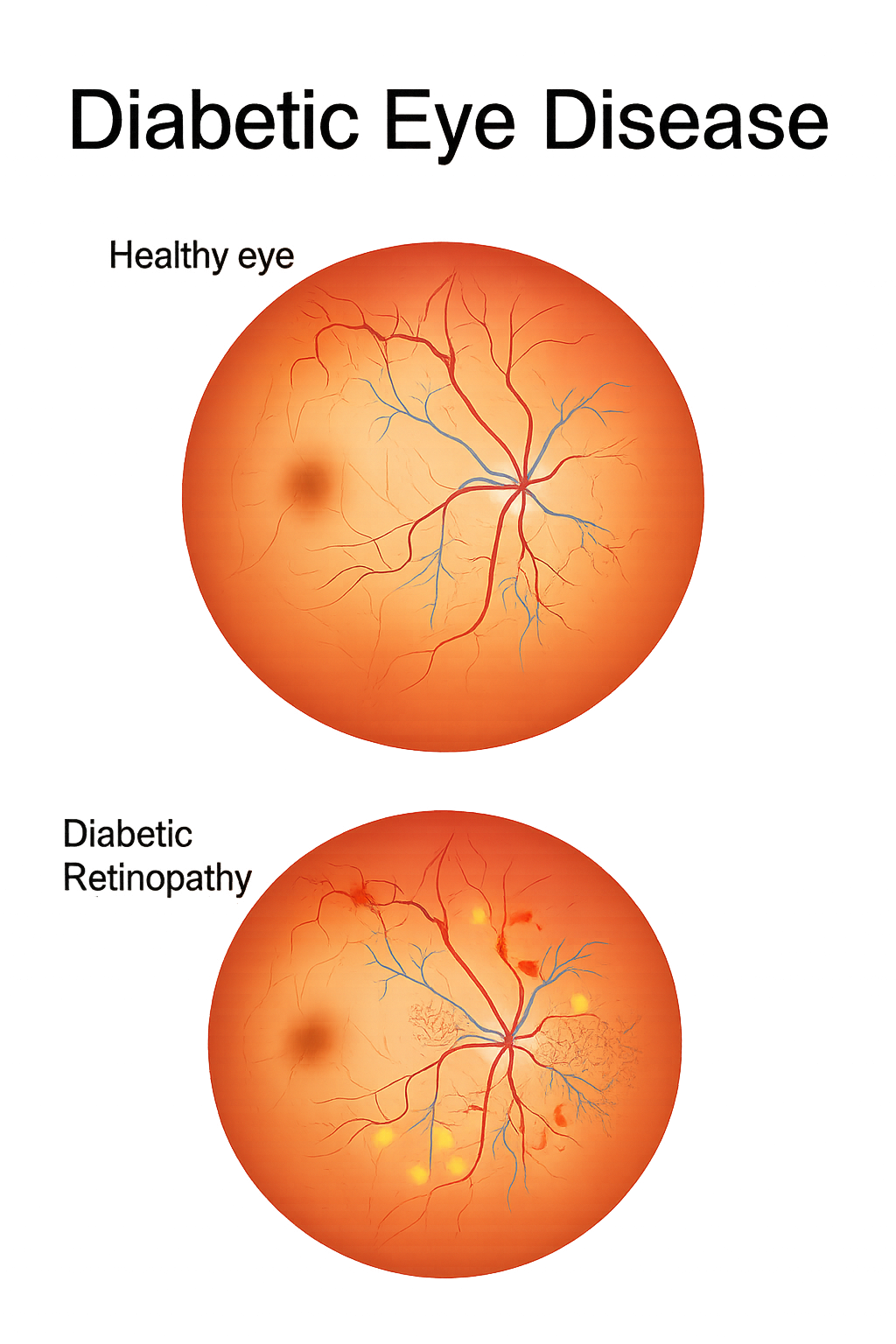

Severe diabetic retinopathy characterised by haemorrhages (red spots) and hard exudates (white spots)