Understanding Myopia
Myopia, or short-sightedness, is one of the most common eye conditions worldwide and is increasing rapidly, especially among children. It occurs when the eye is unable to focus light directly on the retina, causing distant objects to appear blurred while near vision remains clear. Myopia usually develops during childhood and tends to progress throughout the school years.
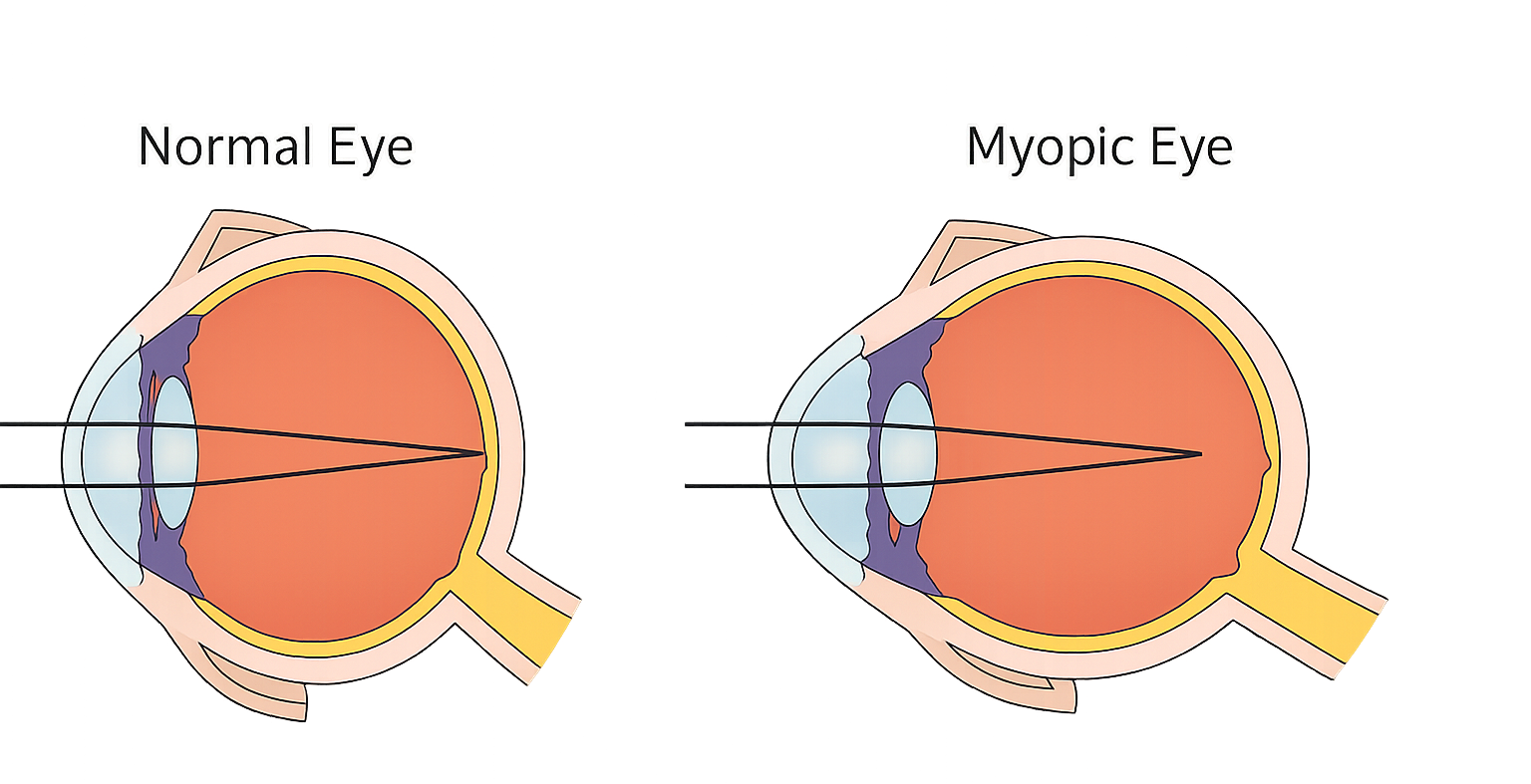
A major structural cause of myopia is axial elongation—the eye becomes physically longer from front to back. In a normally shaped eye, incoming light focuses precisely on the retina. But when the axial length increases, the focal point falls in front of the retina, resulting in blurred distance vision. This elongation is not simply a refractive change; it is a physical stretching of the eye wall, particularly the sclera and retina. As the eye elongates, the tissues become thinner and more fragile, increasing vulnerability to long-term complications.
High levels of myopia significantly raise the risk of serious sight-threatening eye diseases. One of the most important is retinal detachment. As the elongated eye stretches, the retina can become thin and prone to developing holes or tears. This can allow fluid to seep underneath, leading to detachment—a medical emergency that can cause permanent vision loss if not treated promptly. Symptoms such as flashes of light, sudden floaters, or a dark curtain in vision require urgent examination.
Myopia also increases the likelihood of myopic macular degeneration, where stretching causes damage to the central retina; glaucoma, due to structural changes that affect the optic nerve; and early cataract development. Even moderate myopia carries increased risk, and the risk grows with higher prescriptions and longer axial lengths.
Fortunately, modern interventions such as orthokeratology, atropine therapy, and myopia-control spectacle or contact lenses can help slow axial elongation in children. Early detection through regular eye examinations is essential to protect long-term vision and reduce the risk of future eye disease.