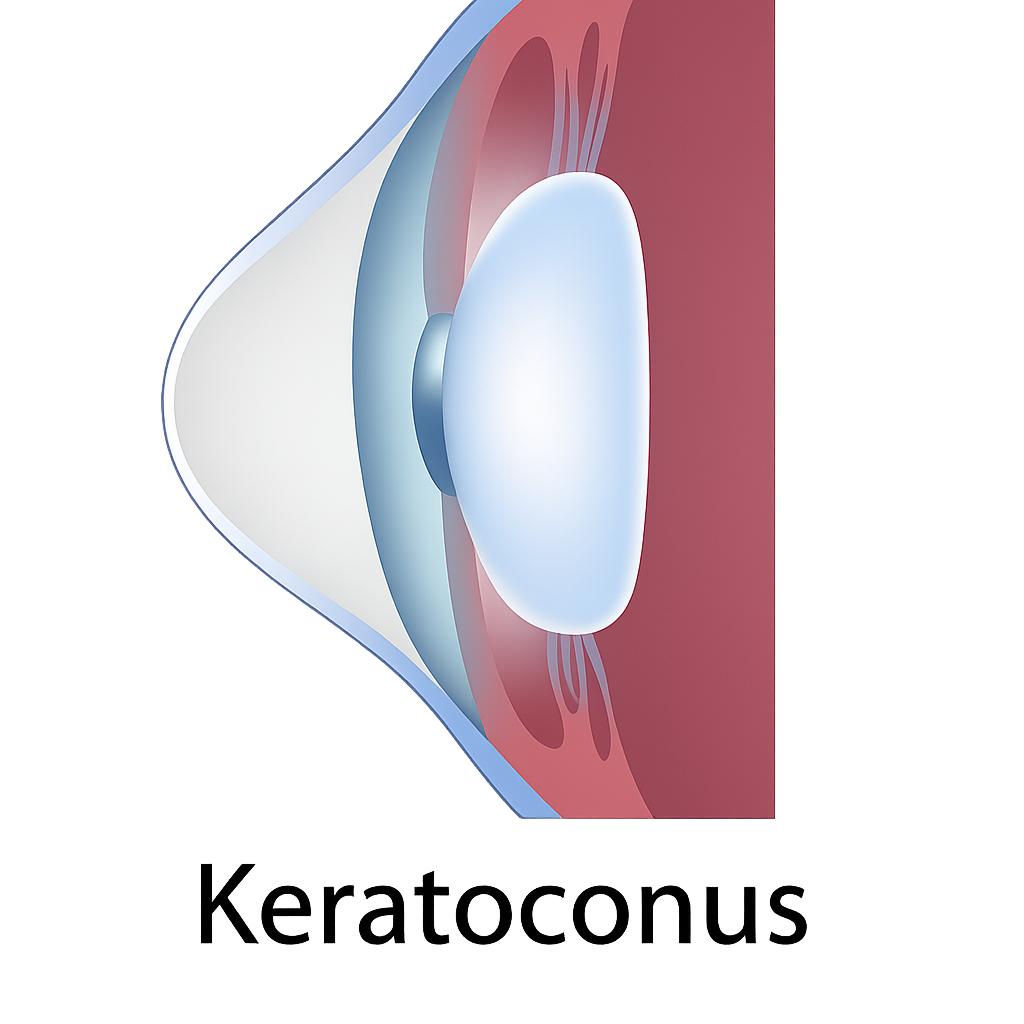
Keratoconus
Keratoconus is a progressive eye condition in which the normally round cornea thins and bulges outward into a cone-like shape. This distortion affects how light enters the eye, leading to blurred or distorted vision, increased sensitivity to glare, and frequent changes in glasses prescriptions. Although most cases appear during adolescence or early adulthood, the condition can progress for many years before stabilising.
Causes and Risk Factors
The exact cause of keratoconus is not fully understood, but research suggests it results from a combination of genetic, biochemical, and environmental factors. Individuals with a family history of keratoconus have a significantly higher risk, indicating a strong genetic component. Eye rubbing is one of the most important modifiable risk factors; it is often associated with allergies, atopy, or habitual rubbing during sleep. Conditions such as asthma, eczema, Down syndrome, connective tissue disorders, and sleep apnoea also appear more frequently among those with keratoconus. Oxidative stress and enzymatic imbalances within the cornea may contribute to weakening of the corneal structure.
Treatment Options
Management depends on the severity and progression of the disease. In early stages, glasses or soft contact lenses may provide adequate vision correction. As the cornea becomes more irregular, rigid gas permeable (RGP) contact lenses offer superior vision by creating a smooth, stable optical surface over the irregular cornea.
For patients with more advanced keratoconus or those intolerant to RGPs, scleral contact lenses are a highly effective option. These large-diameter lenses vault over the entire cornea and rest on the sclera, providing excellent comfort, stability, and visual quality.
To slow or halt progression, corneal collagen cross-linking (CXL) has become the standard of care. This procedure strengthens the corneal tissue using riboflavin and ultraviolet light. In advanced cases where scarring or extreme thinning occurs, surgical options—such as intracorneal ring segments (ICRS) or corneal transplantation—may be necessary.
With early diagnosis and modern treatment options, most patients with keratoconus can achieve excellent long-term visual outcomes.